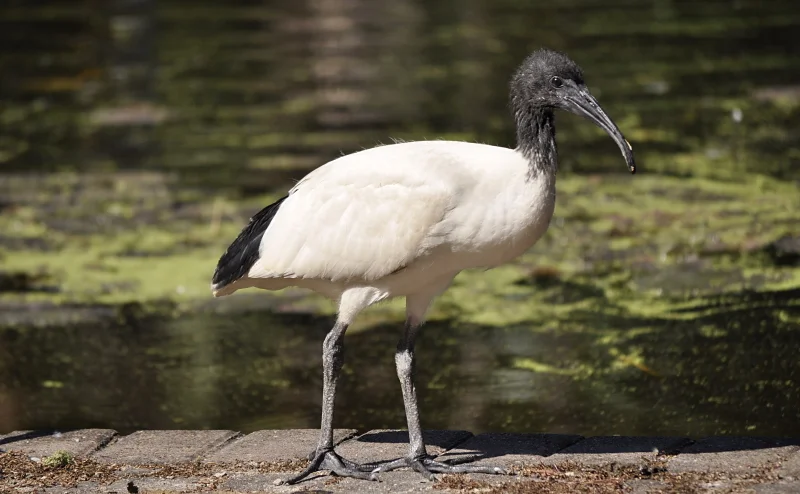


Brisbane’s botanic gardens at Mt Coot-tha sit at the edge of the city like a kept secret. I first drove up there on a weekday morning in 2011 with no particular plan — just a camera, a few hours, and the intention to be somewhere quiet. I have been going back ever since.
What I did not expect, that first visit, was how technically demanding the place would be. A garden seems simple: green, still, well-lit. In practice it is one of the most complex environments I photograph. The light is constantly interrupted. Shadows fall in unpredictable directions. The moment you find a composition, a cloud shifts or a breeze moves the subject. The garden is never still enough for you to be lazy.
On slowing down: The most useful thing I have done in these gardens is leave the zoom lens at home. A prime lens forces you to move your body rather than adjusting from a distance. You get closer than feels comfortable, you crouch when you should be standing, and you start to see details you would have passed over — the curl of a frond, the texture of bark, the way water beads on a succulent’s surface.
On black and white: Some parts of the garden — the fern gully in particular — are so tonally rich in grey and silver that colour almost gets in the way. I have converted many of my botanic images to monochrome not as a stylistic choice but because the shapes were strong enough to carry it. When a photograph works in black and white, you know the composition was doing the real work.
On the vertical frame: I am a horizontal-frame photographer by default, which means the garden regularly corrects me. The bamboo grove, the climbing vines, the trunk of a Moreton Bay fig — these subjects demand a vertical orientation and they punish you for ignoring that. I try to remember to rotate the camera at least once every ten minutes, even when it doesn’t feel obviously necessary. Half the time I’m wrong. The other half I find something I would have missed.
On returning: I have photographed this garden in summer rain, in the grey flat light of winter, in the hard midday sun that most photographers avoid, and in the last twenty minutes before the gates close when the light goes gold and soft. No two visits have produced similar work. The garden is patient with repetition. It always has something new.
There is a lagoon near the centre of the gardens where turtles surface in the late afternoon. I have never managed a photograph of them that I am entirely happy with. I keep going back.


