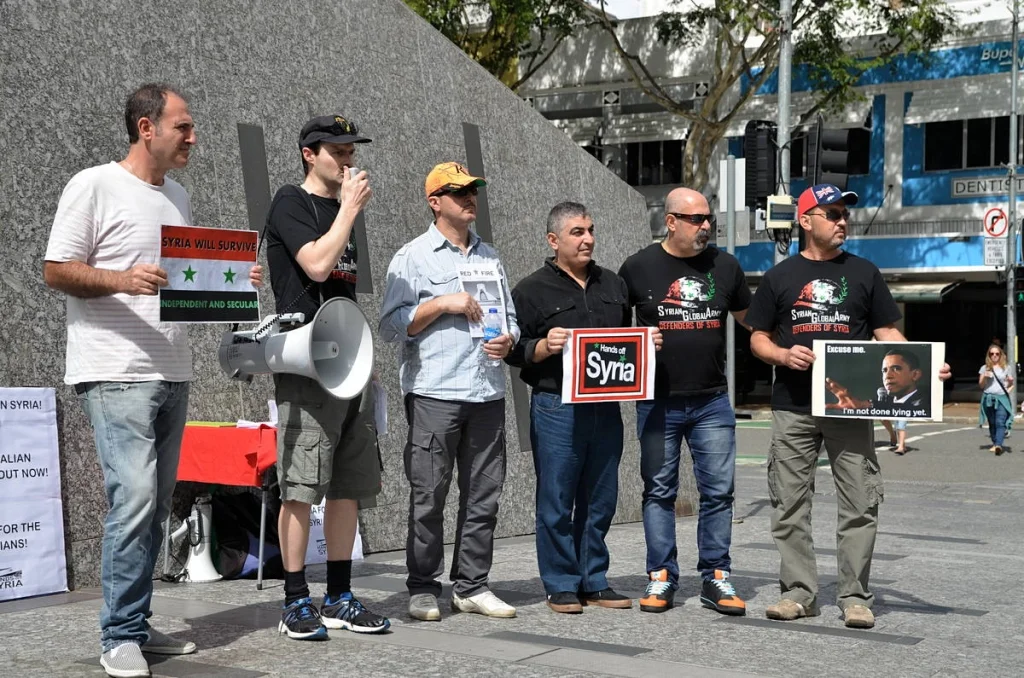


Small protests are photographically interesting in a way that large ones are not. When the crowd numbers in the dozens rather than the thousands, each face matters more, the dynamics between participants are more legible, and the gap between the size of the gathering and the size of the issue it is addressing becomes its own kind of statement.
This rally, held in Brisbane’s CBD in late 2015, opposed the Australian government’s decision to join the military operation in Syria. The crowd was small, the speeches were long, and the people who showed up had come for specific reasons that the photographs, if you look carefully, begin to explain.
On the Syrian community: Several participants were clearly from Syrian backgrounds — men in “Syrian Global Army — Defenders of Syria” shirts, an older man who spoke with an accent and an authority that came from personal knowledge of what the conflict meant on the ground. These were not abstract political positions. They were statements about family, about home, about what Australian bombs would actually hit.
On the megaphone speakers: The rally used a portable megaphone rather than a proper PA, which meant the speeches had a different quality — more urgent, less polished, delivered close to the crowd. The older man in the white straw hat was the most experienced speaker, and the photographs of him have a quality of gravity that is hard to manufacture.
On the masks: Several protesters wore Guy Fawkes masks — the Anonymous-associated mask that had appeared at similar rallies globally. A father and child wore matching ones and stood looking up at the speakers together. A woman in a red “Refugee Rights Are Human Rights” shirt wore one while giving a peace sign to the camera. The mask makes portrait photography formally interesting — the face is concealed but the body language remains, and the layering of different kinds of protest iconography says something about how political identity was being assembled at that particular moment.
On photographing small protests: The temptation at a small rally is to use wide shots to show the size of the crowd, which undermines the photographs by making the gathering look marginal. I do the opposite — I shoot tight, focus on faces and signs, and let the scale disappear into the background. What remains is the intention.


