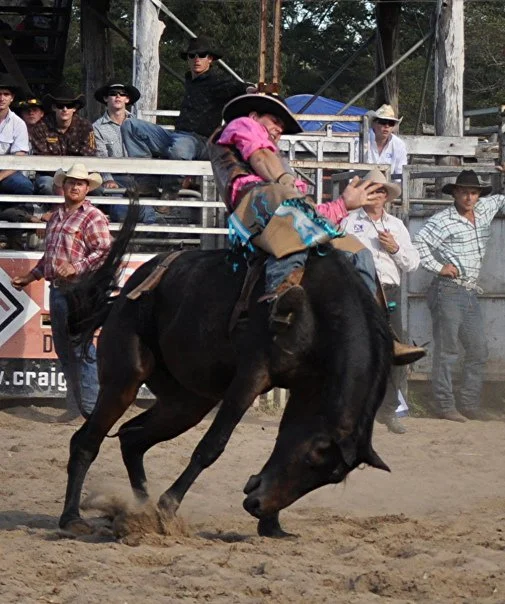


Dayboro is a small town in the Moreton Bay hinterland about an hour north of Brisbane, and every year it hosts a rodeo that draws competitors and spectators from across southeast Queensland. I drove up one Saturday with no particular plan beyond seeing what the photography might offer.
What I found was an event that operates on a different visual register from anything I photograph in the city. The arena is dirt, the fences are timber, the crowd wears hats and flannelette, and the competition involves animals that are genuinely dangerous. The combination of dust, motion, and real stakes produces photographs that feel different from festival or concert work.
On bull riding: The eight-second bull ride is the centrepiece event and the hardest thing to photograph well. The action is explosive, unpredictable, and brief. I found it useful to shoot from outside the chute as the gate opened rather than tracking the full ride — the first half-second of a bull coming out of the chute often contains more visual energy than anything that follows.
On barrel racing: The barrel racing was more predictable and technically rewarding. The pattern is fixed — three barrels, three turns — and once you know it you can pre-position for the tightest turn, which is where the horse’s body makes the most interesting shape. A low angle that catches the displaced sand gives you something the eye alone can’t see.
On the livestock: I spent time at the holding pens before the competition began, which most photographers at these events don’t bother with. The bulls waiting together — horns overlapping, entirely calm — read differently from the same animals in the arena. The contrast between the two states was something I kept thinking about.
The rodeo is still running annually at Dayboro. It is worth the drive.


