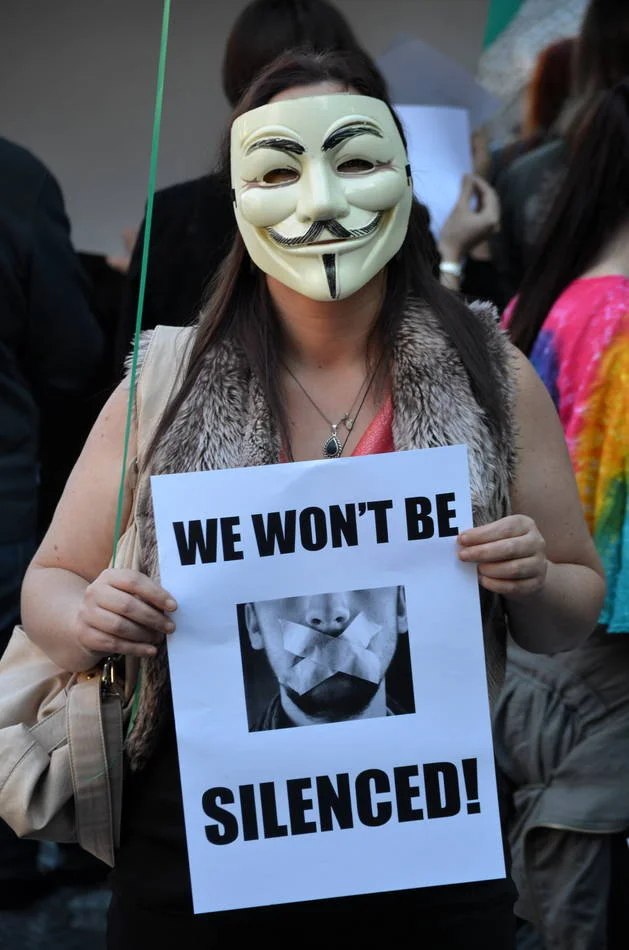


The Border Force Act came into effect in July 2015. Among its provisions was a clause that made it a criminal offence — punishable by up to two years in prison — for anyone working in immigration detention to disclose information about what happened inside those facilities. This applied to doctors, nurses, teachers, social workers, and psychologists who worked with detainees. The intent was transparent: to prevent professionals from speaking publicly about what they witnessed.
In Brisbane, hundreds of people gathered to protest. Many of them were those professionals — carrying hand-written signs that said “I’m a nurse and I oppose the Border Force Act,” “I’m a teacher and I oppose the Border Force Act,” “I’m a psychologist and I oppose the Border Force Act.” Reading those signs in a crowd was one of the stranger experiences I have had at a demonstration. It was a collective refusal to be made anonymous.
On the handwritten signs: The uniformity of format — white paper, black or red marker, the same sentence structure — created an unintentional solidarity. These were not pre-printed protest signs. They were made individually, probably the night before, and together they formed a document of the professions that had decided this law was not acceptable. Photographing them required working through the crowd rather than at its edge, getting close enough to read each one without missing the face above it.
On the Guy Fawkes mask: The figure in the Anonymous mask, holding a “We Won’t Be Silenced” sign, was the obvious image of the day — and sometimes the obvious image is correct. The mask, worn by someone protesting a silencing law, is the kind of visual irony that a documentary photographer does not manufacture. You just have to be close enough to get it sharp.
On the speakers: The rally produced two speaker photographs that I am genuinely proud of — a woman at the microphone reading testimony from notes she has held so long they have creased, and an older man speaking without notes, the microphone held loosely, the face doing the work. Both are portraits of people who are choosing, at some personal risk, to say publicly what the law was designed to prevent them from saying.
On what happened next: The law was eventually amended following public pressure. The rally, and others like it, were part of that pressure. Protest photography is not just a historical record. Sometimes it is an argument that continues to be made.


![Handwritten 'I'm a [profession] and I oppose the Border Force Act' signs created an accidental collective portrait of the professions that a democracy needs to function.](/images/border-force-act-rally-nurses-oppose.webp?auto=format&fit=crop&w=960&q=85)


