

Australia Zoo does something unusual for a tourist attraction: it takes its subject seriously. The animals are not props for photographs with visitors — or at least, not only that. The enclosures are large, the animal presentations are run by people who clearly understand what they are working with, and the photography opportunities that result from all of this are genuinely exceptional.
I visited on a weekday in June, which meant light crowds and the kind of unhurried access to the animal areas that changes what you are able to make. When you are not competing with a tour group for position, you can wait for the right moment rather than taking what you are given.
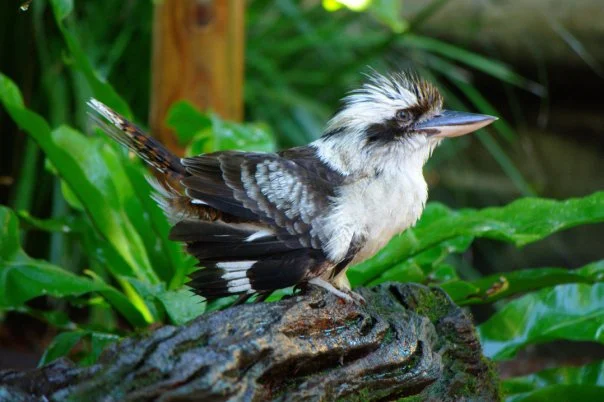
On the kookaburra: The bird presentation area includes a kookaburra that was ruffling its feathers on a perch at approximately eye level with a standing adult. It held the pose long enough for me to work through several framings. The background — deep green tropical foliage — made the white-and-brown of the plumage pop in a way that would be difficult to replicate in the field.
On the crocodile: The saltwater crocodile demonstration is held in an open area with a grass surround. The scale of the animal is difficult to convey in a tight crop, so I pulled back to include the lawn. The domestic setting — mown grass, a clear blue sky — makes the animal’s size and indifference more legible than any enclosure shot.
On the tiger cub: The tiger encounter allowed a small group to sit within arm’s reach of a cub that was being handled by two zookeepers. The cub’s chin was resting on one keeper’s wrist. I had perhaps ninety seconds and I used most of them watching rather than shooting. Then I made the frame.
On the cockatoo flight show: The bird show takes place in a stadium with yellow and green seats. When the red-tailed black cockatoo came in low during the demonstration, the colour contrast between its plumage and the seating was extraordinary. I had one pass to get it. I got it.
Australia Zoo is one of the few places in Queensland where wildlife photography is both accessible and genuinely challenging. The light, the backgrounds, the animal behaviour — none of it is simple, even when the animals are cooperative.


