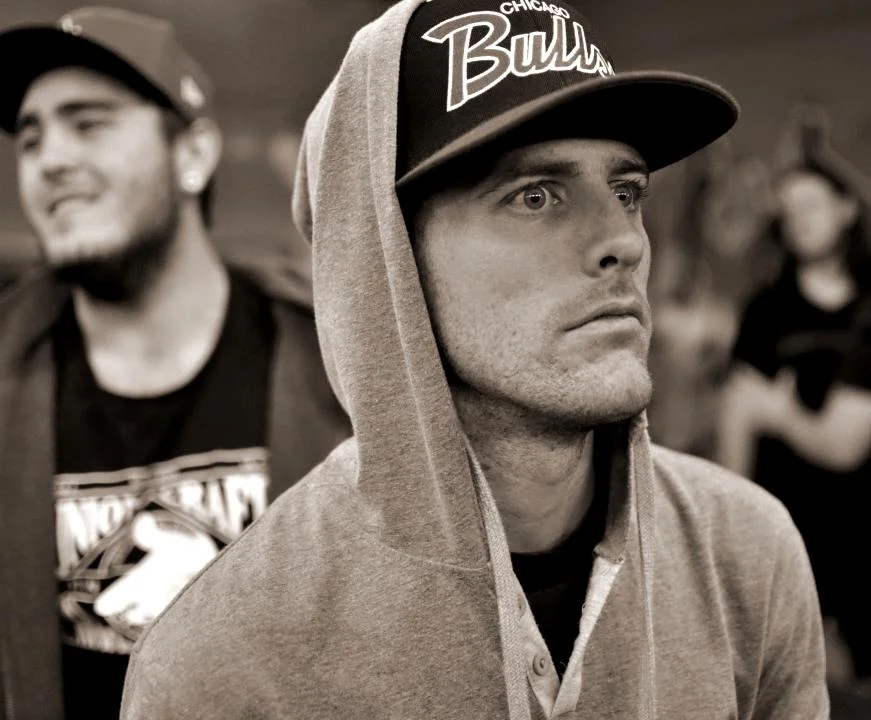


The second Call to Arms was bigger than the first. The venue had more room, the production had improved, and the lineup had grown. The space was covered in graffiti murals from floor to ceiling, which meant every image had a visual backdrop that suited the subject completely. I did not have to work hard to make the environment look right — it already looked right.
I had a better sense of the format this time around. Battle rap follows a predictable structure — pre-battle ritual, rounds, judging — but the emotional content of each battle is completely unpredictable. Faces shift from concentrated calm to explosive delivery to quiet waiting between rounds. You get a full range of expression in a single battle, and none of it is performed for the camera.
On the venue: The graffiti walls changed the photography. In the first event, the background was generic pub interior and I had to work around it. Here, every angle produced a frame with visual texture behind the subjects. The murals were colourful and detailed enough to read as a backdrop even when completely blurred at wide aperture.
On the pre-battle moments: I found myself more interested in the minutes before each battle than the battles themselves. The way two performers interact when they are waiting — sometimes relaxed and friendly, sometimes already psychologically at war — tells you what kind of battle is about to happen. A handshake that lingers a beat too long is information.
On the crowd: Unlike most music events, battle rap audiences stand close to the performers and react loudly. The crowd is part of the photography because the crowd is part of the performance — their response is what the battlers are working for. Getting in the middle of it rather than shooting from the perimeter gives a different set of images.
Real Talk was building something genuine in Brisbane and this event showed it.
More Real Talk battle rap coverage: Real Talk Call to Arms · Guard Ya Grill · Brizzlemania · Brizzlemania 2


