

The images from Don Dale — children in restraint chairs, tear gas in a detention facility, guards in riot gear — were broadcast in 2016 and produced an immediate response. Brisbane’s rally was held within days, and the crowd that gathered outside Parliament House included people I had not seen at previous protests: families with young children, elderly people, grandparents.
The photographs from that day are quieter than most of what I make at protests. The anger was real and present, but the dominant mood was grief — a collective reckoning with something that had been happening out of sight and was now unavoidable.
On the children: The most affecting images from the day involved children. A girl in a pink dress held aloft on an adult’s shoulders, both arms raised over her head gripping a sign. A younger child in a bucket hat, mouth open, holding another sign above her head. These are images I find difficult to look at without feeling the full weight of what they are saying — that the people most affected by these policies are children, and that the people protesting on their behalf brought their own children to say so.
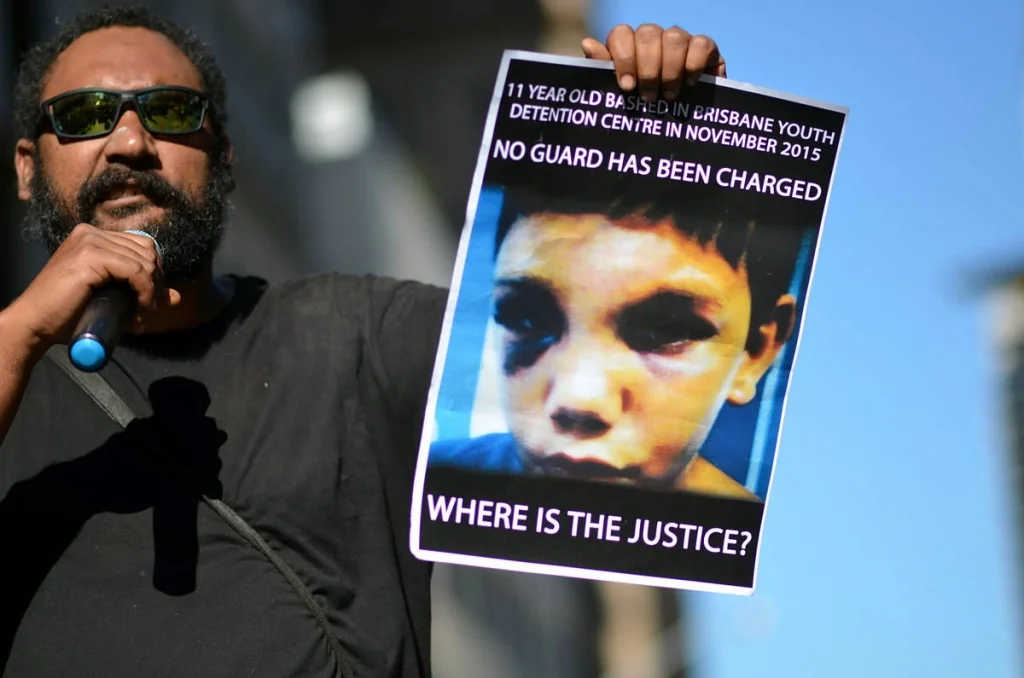
On the speaker: The first image I made was of an Aboriginal man at the microphone, holding a printed photograph of a bruised child’s face and a sign that read “Where Is The Justice?” He was looking directly at the crowd. I made two frames. Both are in the edit.
On the smoking ceremony: Near the end of the rally, an Aboriginal man in a black cap crouched over a half-barrel of smoking eucalyptus while the Aboriginal flag was held behind him. The smoke rose in a thin column in the winter light. It was the most composed image of the day — the one that felt like a statement rather than a record.
On documentation: Protests like this one matter to photograph because they create a visual record of public opposition that supplements and outlasts the news cycle. The signs, the faces, the children — all of it says something about a particular moment in this country’s politics that text alone cannot.


