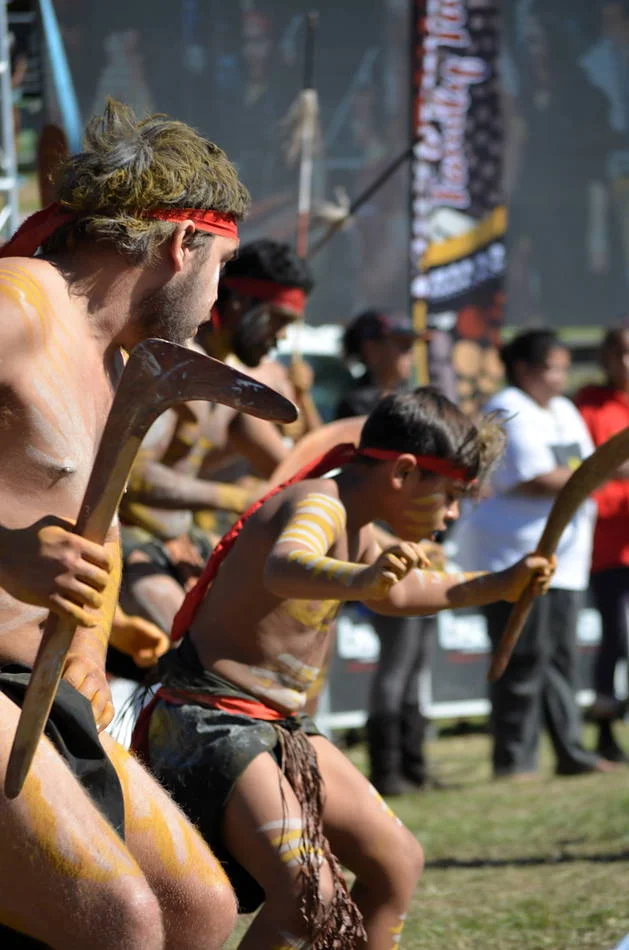


Musgrave Park sits in the middle of West End, a suburb that has been in the middle of things for a very long time. The park has hosted protests and corroborees, markets and memorials, and on a cold winter Sunday in July 2016 it filled up again — this time with families, elders, performers, and the general cheerful noise of a community event done well.
I was there with a camera and no particular agenda, which is often the best way to arrive at a community day. No shot list, no client brief — just the willingness to follow whatever was worth following.
On elders and protocol: I always approach elders carefully at events like this. I watch before I approach, I introduce myself, I explain what I do and where the photographs might end up. More often than not, people are generous with their time and their faces. The elder I photographed at the microphone had a stillness to him that the camera loved — decades of presence condensed into a single frame.
On traditional performance: The dance performances were extraordinary. Young people in body paint moving with a precision and intensity that made the crowd go quiet. I moved to the edge of the performance space and worked with a longer lens to stay out of the dancers’ sight lines. There is a rhythm to ceremony that you learn to work with rather than interrupt.
On children: A boy with a bubble gun, completely absorbed, wearing a cap patterned in traditional design — that photograph found me more than I found it. I nearly walked past him. The images that matter most at events like these are often the ones you catch in the gaps between the formal performances.
On community photography: What I want from a day like this is a record that the community itself might want to keep. Not a set of images for a tourism brochure, but photographs that reflect people’s actual experience of a place and an occasion. Whether I succeed at that is for them to judge, not me.


